Scrolling Yourself Into Misery: How Social Media Turned Comparison Into a Full-Time Job
You're Not Insecure — You're Just Human (And the Algorithm Knows It)
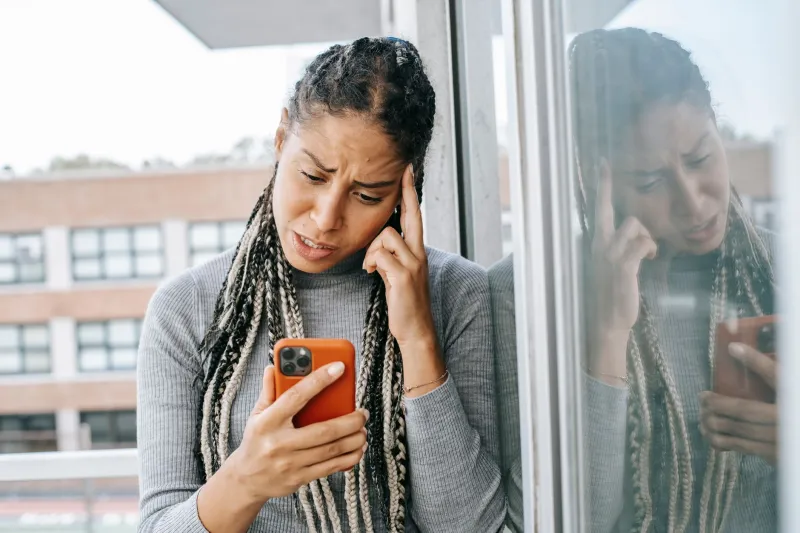
You open Instagram to kill five minutes before a meeting. Forty-five minutes later, you put your phone down feeling vaguely terrible about your apartment, your body, your vacation choices, and your general trajectory as a person. Sound familiar?
You're not alone, and you're not weak. You're just caught in one of the most sophisticated psychological traps ever engineered — one that's been specifically designed to keep you coming back, feeling just bad enough to keep scrolling.
Social media comparison isn't a new concept, but the scale and precision of it in 2025 is something genuinely different from anything humans have dealt with before. We've always measured ourselves against our neighbors, our coworkers, our siblings. But now we're measuring ourselves against thousands of people simultaneously, every single day, through a filter system that literally removes imperfection from the equation.
"What makes modern social media uniquely damaging is the asymmetry," says Dr. Priya Mehta, a clinical psychologist based in Chicago who works extensively with young adults. "You're comparing your full, unedited internal experience — your anxiety, your cluttered kitchen, your complicated feelings — against someone else's most curated, flattering, carefully chosen moments. It's not a fair fight. It was never meant to be."
The Science Behind Why It Hurts
There's a reason this hits so hard, and it goes deeper than vanity. Social comparison is actually a cognitive process rooted in survival. Humans evolved to assess where they stood in a group because status and belonging meant safety. That instinct hasn't gone anywhere — it's just been hijacked.
When you see a former classmate posting about their new home in Austin with the open-concept kitchen and the golden retriever and the apparently effortless marriage, your brain doesn't process that as "curated content." It processes it as social information. Real information. Information that gets filed away as evidence of where you stand.
Research published in the Journal of Social and Clinical Psychology found that limiting social media use to roughly 30 minutes per day led to significant reductions in loneliness and depression. Another study out of the University of Pennsylvania showed that participants who cut back on social media reported feeling substantially less anxious and more satisfied with their lives — even if nothing else in their circumstances changed.
Nothing in their actual lives changed. Just the amount of time they spent watching other people's highlight reels.
The Highlight Reel Problem Nobody Talks About Honestly
Here's the thing about highlight reels: everyone knows they exist, and yet almost nobody actually accounts for them emotionally.
We say the words. "Oh, Instagram isn't real life." "Nobody posts about their bad days." We say it and then we scroll and feel bad anyway, because knowing something intellectually and feeling it in your gut are two completely different things.
Jamila, a 31-year-old marketing coordinator from Atlanta, described it this way: "I knew my college friend's life wasn't perfect. I knew she had problems. But every time I saw her posts — the trips to Portugal, the promotions, the cute couple photos — I felt this sinking feeling. Like I was running a race and didn't know it, and she was winning."
That race metaphor is something psychologists hear constantly. Social media doesn't just trigger comparison — it invents competitions that didn't previously exist. Suddenly you're measuring your weekend against someone else's. Your relationship milestones against a stranger's timeline. Your body against a fitness influencer who literally gets paid to look like that.
What You Actually Want vs. What You Think You Should Want
One of the more insidious side effects of chronic social comparison is that it starts to distort your own desires. You stop knowing what you actually want because you've spent so long absorbing what other people seem to have and project wanting.
Do you actually want a big house in the suburbs, or did you want it because you've watched three dozen people post about buying one? Do you genuinely want to travel more, or do you want the version of travel that looks good in photos? These aren't rhetorical questions — they're genuinely hard to answer when your sense of what's desirable has been shaped by an algorithm optimized for engagement, not fulfillment.
Dr. Mehta recommends what she calls a "desire audit" — a simple exercise where you write down things you want without referencing what you've seen online. "Ask yourself: if nobody could ever know about it, would I still want it? If the answer is no, that's a signal worth paying attention to."
Marcos, a 28-year-old teacher from Denver, did something similar after realizing he'd been miserable for two years chasing a lifestyle that didn't actually suit him. "I kept feeling behind because I wasn't making six figures or traveling constantly or whatever. Then I actually sat down and thought about what a good day looks like for me. Turns out it involves hiking, cooking at home, and hanging out with like four people I actually like. None of that photographs well. All of it makes me genuinely happy."
Practical Ways to Break the Cycle
So what do you actually do with all of this? A few things that research and real experience suggest actually work:
Unfollow ruthlessly, without guilt. You don't owe your attention to anyone. If an account consistently makes you feel worse about your life, it doesn't matter how much you like the person or how beautiful their content is. Unfollow. Mute. Protect your headspace.
Create friction between you and the scroll. Delete apps from your home screen. Set app timers. Make it slightly inconvenient to open Instagram at 11pm when you're already tired and vulnerable. You don't need to go cold turkey — you just need to interrupt the automatic habit.
Start noticing what you're feeling before you open the app. Boredom? Anxiety? Loneliness? Social media tends to amplify whatever emotional state you bring to it. If you're already feeling inadequate, a scroll session is going to make that worse, not better.
Fill the feed with content that doesn't trigger comparison. Accounts about hobbies, nature, history, comedy — things that don't map onto your personal life metrics. You can still use social media without using it as a measuring stick.
The Life That Doesn't Photograph Well
Here's an uncomfortable truth: a lot of the best parts of life don't make great content. Long conversations with people you love. The particular satisfaction of finishing a hard project. The slow, unglamorous work of becoming someone you actually respect. None of that fits neatly into a grid.
The comparison trap is ultimately a distraction from the actual business of building a life — one that's yours, shaped by what you genuinely value, not optimized for external validation.
Your life probably looks pretty different from what you see on your feed. That's not a problem. That might actually be the point.